
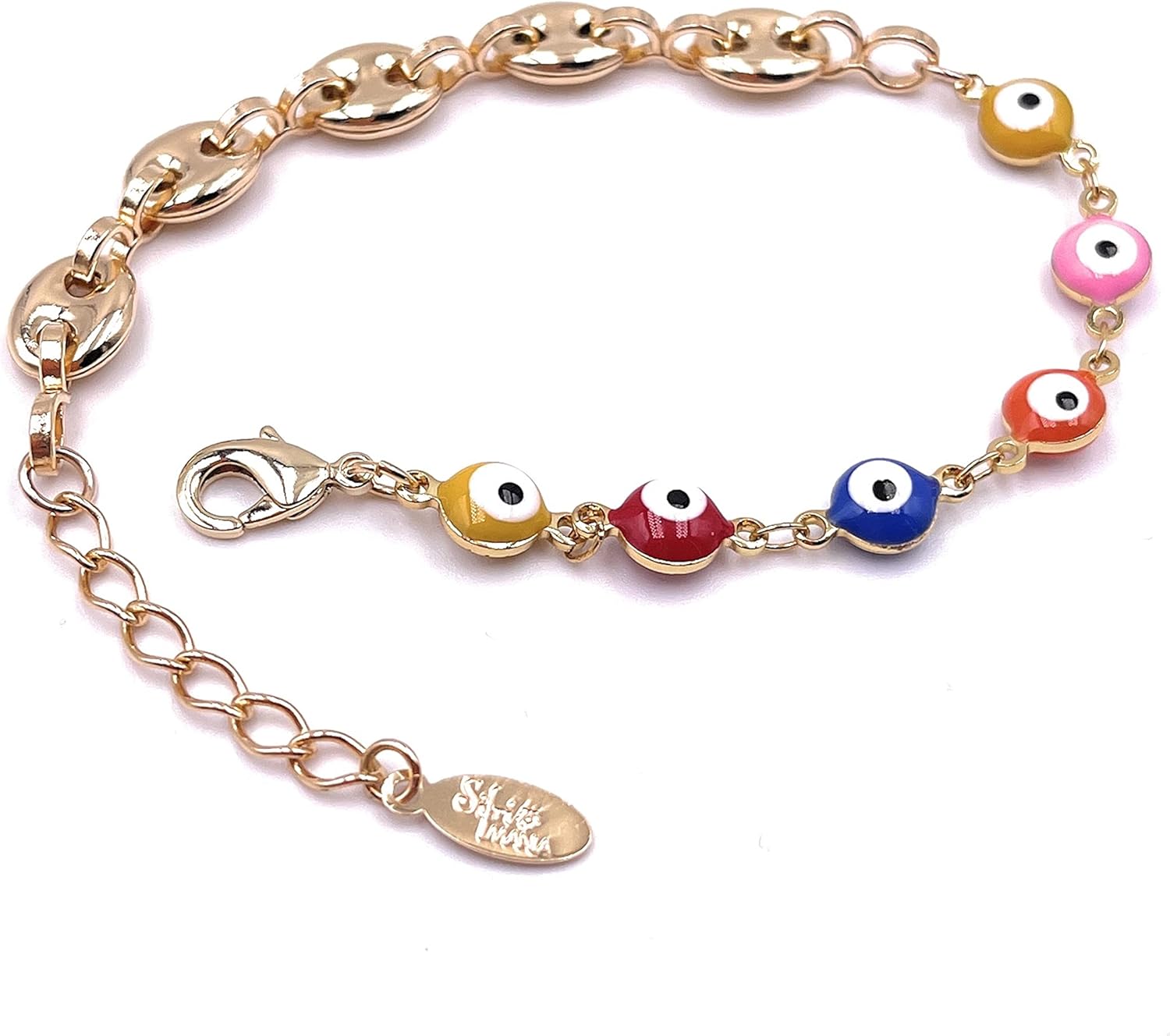
SIFRIMANIA Evil Eye Mariner Chain Colorful Bracelet, Protection Jewelry for Women
$28.00
Price when purchased online
Free shipping
Free 30-day returns
Sold and shipped by www.wafi-egypt.com
We aim to show you accurate product information. Manufacturers, suppliers and others provide what you see here.
$28.00
Price when purchased online
Free shipping
Free 30-day returns
Sold and shipped by www.wafi-egypt.com
Free 30-day returns Details
Product details
| Management number | 227695173 | Release Date | 2026/05/09 | List Price | $11.20 | Model Number | 227695173 | ||
|---|---|---|---|---|---|---|---|---|---|
| Category | |||||||||
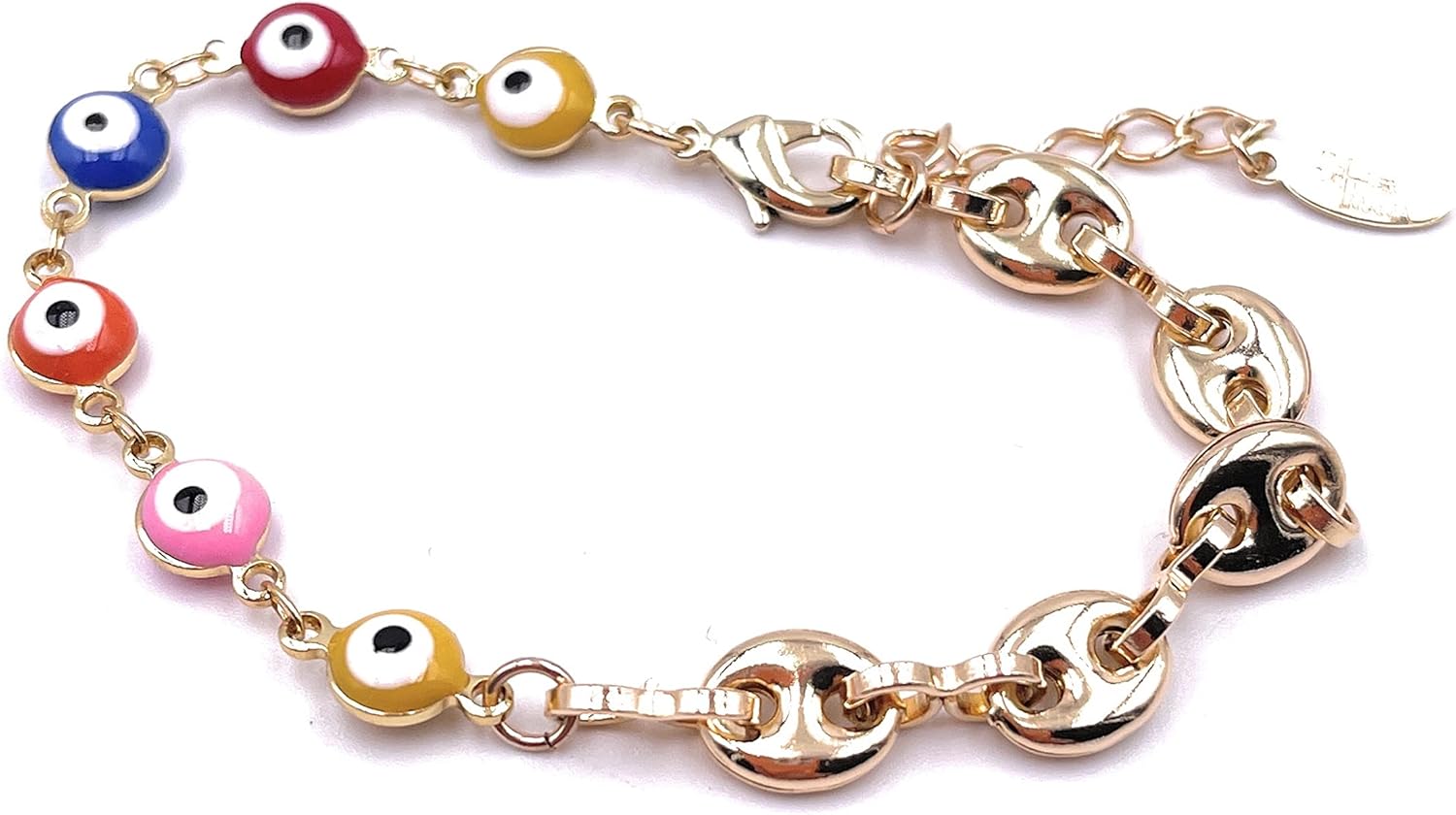
- Details: Made with half interlocking chain and half multicolor evil eyes. Lobster clasp for closure. Length: 7 inches or 18cm plus 1-inch extension chain. Adjustable.
- Plating: Our gold plated jewelry is created by pressure bonding on a layer of 18K solid gold to brass metal, has the same look as solid gold, and has a more affordable price for everyone. The layer of gold used is significantly thicker than other existing marketplace plating pieces.
- Design Concept: The evil eye belief involves malevolent stares causing misfortune. To counter this, wearing an evil eye bracelet is a protective charm, shielding against negativity and promoting a sense of security and positivity.
- Handmade: Artisanal products often have a personal touch and attention to detail that mass-produced items can't replicate. With our handcrafted jewelry, you'll support traditional craftsmanship and be the proud owner of a truly one-of-a-kind accessory. By choosing handcrafted, you're supporting the work of artisans and preserving traditional techniques. This results in a beautiful, unique, high-quality piece with special meaning and value.
- Own and Original SIFRIMANIA design
| ASIN | B09WPK5WTD |
|---|---|
| Size | Medium |
| Color | Gold |
| Style | Bohemian Minimalist Statement Dainty Trendy Ethnic Mystical Vintage Contemporary Exquisite |
| Gem Type | no gemstone |
| Brand Name | SIFRIMANIA |
| Chain Type | other-chain-type |
| Clasp Type | Lobster Claw |
| Metal Type | gold-plated-base |
| Unit Count | 1 Count |
| Metal Stamp | no-metal-stamp |


Bestseller ranking
Physics





Customers who viewed this product also viewed
Platforms & Wedges




Correction of product information
If you notice any omissions or errors in the product information on this page, please use the correction request form below.
Correction Request Form